The global SaaS market is projected to reach approximately $375 billion in 2026, growing at a compound annual growth rate of over 18% through the end of this decade. That kind of momentum makes software as a service ideas one of the most attractive paths for entrepreneurs, development agencies, and tech startups looking to build recurring revenue streams.
But not every SaaS concept is worth pursuing. The difference between a profitable product and an expensive failure usually comes down to whether the idea solves a real, recurring business problem for a specific audience. Generic tools competing in saturated markets struggle to gain traction, while focused solutions built around clear workflows and measurable ROI tend to attract paying customers faster.
This guide breaks down 15 SaaS business ideas that reflect genuine market demand heading into 2026. Each idea includes the target audience, why the opportunity exists, and the revenue model that makes it viable. Whether you are a solo founder exploring micro-SaaS or a development team evaluating your next product build, these software as a service business ideas are grounded in current industry trends and buyer behavior.
Why SaaS Continues to Dominate the Software Industry
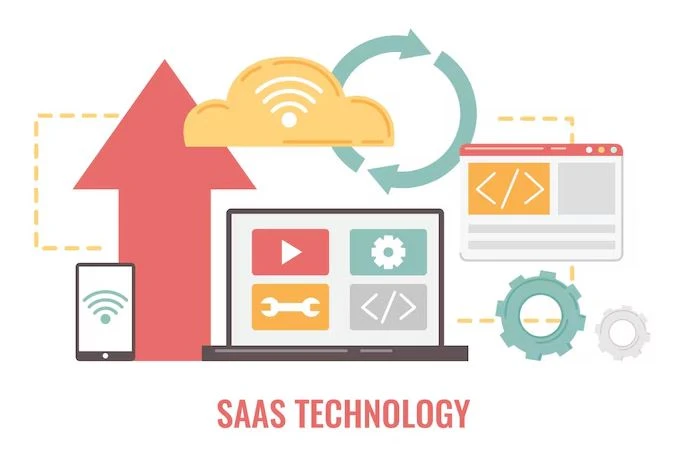
SaaS has moved well past the early-adoption phase. According to multiple industry reports, over 99% of organizations now use at least one SaaS application, and the average enterprise manages close to 300 SaaS tools across departments. This level of adoption reflects a structural shift in how businesses buy and use software, not a passing trend.
Several factors continue to drive this growth. Cloud-based delivery eliminates the need for on-premise infrastructure, which means lower upfront costs and faster deployment. Subscription pricing transforms large capital expenditures into predictable monthly operating expenses, a model that appeals particularly to small and medium-sized businesses. Automatic updates ensure that users always run the latest version without manual intervention, reducing the burden on internal IT teams.
The rise of AI has added another layer of acceleration. Over 80% of companies are expected to deploy AI-enabled applications by the end of 2026, and 75% of SaaS companies have already shipped at least one AI feature. For entrepreneurs evaluating SaaS opportunities, this means that AI-native functionality is no longer a differentiator but a baseline expectation from enterprise buyers.
How to Evaluate a SaaS Business Idea Before Building
Before committing development resources to any software as a service idea, it helps to run it through a practical validation framework. The most common reason SaaS products fail is not a lack of technical capability but a lack of product-market fit. These checkpoints can save months of wasted effort.
Identify a recurring pain point. SaaS works because customers pay month after month. That only happens when the problem you solve recurs regularly. A tool that fixes a one-time issue does not generate sustainable subscription revenue.
Define a specific target audience. Vertical SaaS products built for a single industry or role consistently outperform horizontal tools that try to serve everyone. A CRM designed specifically for real estate agents will convert better than a generic CRM competing with Salesforce.
Validate willingness to pay. Talk to potential customers before writing code. If businesses are currently solving the problem with spreadsheets, manual processes, or cobbled-together workarounds, that is a strong signal of demand. If they already have a satisfactory tool, you need a clear reason they would switch.
Assess the competitive landscape. Competition is not a dealbreaker; it actually validates the market. What matters is whether you can differentiate on workflow fit, pricing, or a specific feature gap that incumbents have ignored.
1. AI-Powered Content Optimization Platform
Content marketing drives customer acquisition for thousands of businesses, but most teams still rely on fragmented tools for keyword research, writing, SEO auditing, and performance tracking. An AI-powered content optimization platform that consolidates these workflows into a single dashboard addresses a real operational gap.
The opportunity here lies in going beyond basic keyword suggestions. A strong product in this space would analyze search intent, recommend content structure based on top-ranking pages, grade existing content against competitive benchmarks, and track performance changes over time. Businesses running blogs, resource centers, or content-heavy websites are the primary audience.
Revenue model: Tiered monthly subscriptions based on the number of pages tracked or content pieces optimized. Premium tiers can include team collaboration features and API access for agencies.
2. Telehealth and Virtual Care Management
Telemedicine has evolved from a pandemic-era workaround into a permanent component of healthcare delivery. The demand for virtual care platforms continues to grow, particularly in regions with limited access to specialists and in markets where chronic condition management requires ongoing remote monitoring.
A SaaS telehealth product can serve private clinics, diagnostic centers, and independent practitioners who need secure video consultations, digital prescriptions, appointment scheduling, and electronic health record integration. The key differentiator for new entrants is building for a specific care vertical rather than trying to replicate a general-purpose platform. Solutions focused on mental health, dermatology, or physiotherapy, for instance, can deliver a more tailored experience. If you are considering this space, understanding the full scope of telemedicine app development is an essential first step.
Revenue model: Per-provider monthly licensing with usage-based billing for video consultation minutes or patient volume.
3. Low-Code Application Builders for SMBs
Low-code platforms let businesses build internal tools, forms, workflows, and lightweight applications without writing extensive code. The appeal is speed: teams can prototype and deploy functional apps in days rather than months. This is especially valuable for small and medium-sized businesses that cannot afford dedicated development teams for every internal process.
The SaaS opportunity is strongest when the platform targets a specific use case rather than trying to be a general-purpose builder. A low-code tool designed exclusively for HR onboarding workflows, or one built specifically for field service reporting, will find its audience faster than a platform that competes head-to-head with established players like Bubble or Retool.
Revenue model: Freemium base tier with paid plans based on the number of active apps, users, or integrations.
4. AI Chatbot Platforms for Customer Support
Customer support chatbots have moved past the scripted decision-tree era. Modern AI chatbots leverage large language models to understand context, handle multi-turn conversations, and resolve queries without human intervention. Businesses across e-commerce, banking, travel, and SaaS itself are investing in these tools to reduce support ticket volume and improve response times.
The most viable SaaS play in this space is not building a general chatbot framework but creating an industry-specific solution. A chatbot platform tailored for e-commerce returns and order tracking, for example, solves a narrower problem more effectively than a generic conversational AI tool. For a deeper look at the technical architecture involved, this guide on how to build an AI chatbot covers the essential considerations.
Revenue model: Monthly subscription with pricing tiers based on conversation volume, number of channels, and access to advanced analytics.
5. Vertical CRM Software for Niche Industries
Customer relationship management remains one of the largest SaaS categories globally, but the market is far from saturated at the vertical level. While Salesforce and HubSpot dominate the horizontal CRM space, significant opportunities exist in building CRM tools tailored for specific industries such as real estate, legal services, construction, or fitness studios.
A vertical CRM wins by embedding industry-specific workflows directly into the product. A CRM for a real estate brokerage, for example, would include property listing management, showing schedules, and commission tracking out of the box, features that would require extensive customization in a general-purpose platform. For businesses exploring this direction, a practical starting point is understanding how to build a CRM from the ground up.
Revenue model: Per-user monthly pricing with tiered feature access. Higher tiers include automation, reporting dashboards, and third-party integrations.
6. Cloud-Based Payroll and HR Management
Payroll processing and HR administration are pain points for businesses of every size, but the problem is acute for growing companies in regions with complex labor regulations. A cloud payroll SaaS product that automates salary calculations, tax deductions, leave management, and compliance reporting can eliminate hours of manual work each pay cycle.
The strongest SaaS opportunities in this space are region-specific. A payroll platform built for UAE labor law compliance, for example, would handle gratuity calculations, WPS integration, and visa-linked employee records, features that global payroll tools often treat as afterthoughts. Businesses evaluating this space can explore the fundamentals of custom cloud payroll software development to understand the technical requirements.
Revenue model: Per-employee monthly pricing, often combined with a base platform fee. Add-on modules for benefits administration or expense management drive expansion revenue.
Partner with our software development specialists to pioneer custom solutions that drive your business forward.
Request Your Solution
7. Inventory and Warehouse Management Software
E-commerce growth has made inventory management significantly more complex. Businesses selling across multiple channels — their own website, Amazon, Noon, and physical retail — need a centralized system that tracks stock levels in real time, automates reorder points, and syncs data across sales platforms.
A SaaS inventory management tool built for multi-channel sellers addresses this directly. The product should handle barcode scanning, warehouse bin management, purchase order automation, and integration with popular e-commerce and accounting platforms. Developing a solid inventory management software solution requires careful attention to real-time data synchronization and scalability.
Revenue model: Monthly subscription based on the number of SKUs tracked, warehouses managed, or order volume processed.
8. Learning Management Systems for Corporate Training
Corporate training is shifting from generic course libraries to outcome-driven learning platforms that connect employee development directly to business performance metrics. Most existing LMS platforms focus on course delivery and completion tracking but fail to measure whether training actually improves performance, productivity, or skill acquisition.
A SaaS LMS that ties training modules to measurable business outcomes — reduced onboarding time, improved compliance scores, or skill certification rates — addresses a gap that enterprise buyers are increasingly willing to pay for. The technical foundation for this type of platform is well-documented in resources covering how to build a learning management system.
Revenue model: Per-learner or per-seat licensing with enterprise tiers for custom integrations, white-labeling, and dedicated support.
9. SaaS Spend Management and Subscription Tracking
The average enterprise now manages close to 300 SaaS applications, and a significant portion of that spending goes untracked. Duplicate subscriptions, unused licenses, and uncontrolled shadow IT create budget waste that most finance teams only discover during annual audits.
A SaaS spend management platform that automatically discovers active subscriptions, flags overlapping tools, tracks renewal dates, and benchmarks pricing against market rates solves a problem that grows more expensive every year. The target audience is CFOs, IT leaders, and procurement teams at mid-market and enterprise companies.
Revenue model: Monthly platform fee plus a percentage of identified savings, or flat tiered pricing based on total SaaS spend under management.
10. Fintech SaaS for Payment Processing and Reconciliation
Businesses handling high transaction volumes — marketplaces, e-commerce platforms, subscription services — need payment infrastructure that goes beyond basic gateway integration. A fintech SaaS product that automates payment reconciliation, handles multi-currency transactions, manages chargebacks, and generates compliance-ready financial reports addresses a workflow that most businesses still manage partially in spreadsheets.
The Middle East market presents a particularly strong opportunity here, given the rapid growth of digital payments and the complexity of operating across multiple currencies and regulatory frameworks. For a broader perspective on building in this space, exploring the landscape of fintech app development provides useful context.
Revenue model: Transaction-based fees combined with a monthly platform subscription. Enterprise plans include custom reporting and dedicated account management.
11. Logistics and Fleet Management Platforms
Last-mile delivery and fleet operations are growing more complex as e-commerce continues to expand. Logistics companies, courier services, and businesses with their own delivery fleets need software that handles route optimization, driver tracking, delivery proof capture, and real-time customer notifications.
A SaaS logistics platform that integrates these functions into a single dashboard — while also connecting to ERP and warehouse systems — reduces the operational overhead that logistics businesses currently manage across multiple disconnected tools. The fundamentals of building such a solution are covered in detail in this overview of logistics management software.
Revenue model: Per-vehicle or per-driver monthly pricing with premium tiers for advanced analytics, API access, and multi-depot management.
12. Cloud ERP Solutions for Growing Businesses
Enterprise resource planning software has traditionally been the domain of large corporations with dedicated IT departments and six-figure implementation budgets. Cloud-based ERP solutions are changing this by making integrated business management — finance, procurement, HR, inventory, and operations — accessible to mid-sized companies through a subscription model.
The SaaS opportunity here is building ERP platforms that are pre-configured for specific industries or regional compliance requirements, rather than offering a blank canvas that requires months of customization. Companies evaluating this space can review the landscape of the best ERP software in the UAE to understand what current solutions offer and where gaps remain.
Revenue model: Modular monthly subscriptions where businesses pay for the modules they use. Implementation and training fees provide additional one-time revenue.
13. E-Commerce Management and Storefront Builders
The global e-commerce market continues to expand, and with it, the demand for SaaS platforms that simplify online selling. While Shopify dominates the general market, opportunities exist in building e-commerce SaaS tools tailored for specific regions, business models, or product categories.
A storefront builder designed for the Middle Eastern market, for instance, would natively support Arabic language layouts, local payment gateways, and integration with regional logistics providers. For businesses exploring the technical side of this opportunity, a guide on e-commerce software development outlines the core architecture and feature considerations.
Revenue model: Monthly platform fee with transaction-based commissions, plus premium add-ons for advanced SEO tools, abandoned cart recovery, and multi-store management.
14. Compliance and Regulatory Automation Software
Regulatory compliance is a growing burden across industries including finance, healthcare, food production, and construction. Keeping up with evolving regulations, maintaining audit trails, generating compliance reports, and managing certifications is time-consuming and error-prone when handled manually.
A SaaS compliance automation platform that tracks regulatory changes relevant to a specific industry, automates documentation workflows, sends renewal reminders, and generates audit-ready reports addresses a pain point that companies cannot ignore. The recurring nature of compliance obligations makes this an ideal fit for subscription-based SaaS.
Revenue model: Tiered monthly subscriptions based on the number of regulations tracked, users, or business entities managed. Enterprise plans include custom rule engines and API integrations with existing business systems.
15. AI-Powered Business Intelligence and Reporting
Most businesses collect far more data than they analyze. Traditional business intelligence tools require technical expertise to configure dashboards, write queries, and generate reports. An AI-powered BI platform that lets non-technical users ask questions in natural language and receive visualized answers removes the barrier between raw data and actionable insight.
The SaaS play here is building a BI tool that connects to common data sources — CRMs, accounting software, marketing platforms, spreadsheets — and uses AI to surface trends, anomalies, and forecasts automatically. Businesses exploring AI-driven product development can benefit from understanding how to create an AI app from a technical and strategic perspective.
Revenue model: Per-user monthly pricing with tiers based on data source connections, query volume, and access to predictive analytics features.
What Makes a SaaS Business Idea Profitable Long Term
Not all SaaS products generate sustainable revenue. The ideas that work share a few common characteristics that are worth keeping in mind as you evaluate which opportunity to pursue.
Recurring problem, recurring revenue. The strongest SaaS products solve problems that come back every day, every week, or every month. Payroll runs every cycle. Inventory needs constant tracking. Compliance never stops. This natural recurrence drives retention without requiring aggressive re-engagement campaigns.
Clear switching costs. Once a business integrates a SaaS tool into its daily workflow, switching to a competitor becomes disruptive and expensive. Products that embed deeply into operations — CRMs that store years of customer data, ERP systems that connect to accounting — benefit from this natural lock-in.
Expansion revenue potential. The best SaaS businesses grow revenue from existing customers over time. This happens through usage-based pricing, add-on modules, and tiered plans that encourage upgrades as the customer’s needs scale.
Low marginal cost of delivery. Once the product is built, serving additional customers adds minimal incremental cost. This is the fundamental economics that makes SaaS margins attractive — gross margins of 70% to 85% are standard for well-run SaaS companies.
How to Get Started With Your SaaS Product
Choosing the right idea is only the first step. Execution determines whether a SaaS concept becomes a profitable business or stalls in development. Here is a practical path forward.
Start with a minimum viable product that solves one core problem exceptionally well. Resist the temptation to build a feature-complete platform before launching. Early users provide feedback that shapes the product more effectively than internal assumptions.
Invest in a reliable technical foundation from the beginning. Cloud infrastructure, secure authentication, scalable databases, and CI/CD pipelines are not optional — they are prerequisites for a SaaS product that needs to run reliably for paying customers.
If you lack in-house development capacity, working with an experienced enterprise software development partner can accelerate time to market without compromising on code quality or architecture decisions.
Finally, plan your go-to-market strategy alongside your product roadmap. Content marketing, partnerships, and targeted outreach to your ideal customer profile should begin well before launch day, not after.
Turning SaaS Opportunities Into Sustainable Businesses
The SaaS market in 2026 offers significant opportunities for entrepreneurs and development teams willing to focus on solving specific, recurring problems for well-defined audiences. The 15 software as a service ideas covered in this guide span healthcare, finance, logistics, HR, e-commerce, compliance, and AI — each representing a market segment where demand is growing and incumbents leave room for focused alternatives.
What separates the SaaS business ideas that succeed from the ones that fade is not the idea itself but the execution: validating demand before building, shipping a focused MVP, iterating based on real customer feedback, and investing in the technical infrastructure that supports growth. The market is large enough for well-built products that deliver measurable value, and the subscription model ensures that the returns compound over time.
Whether you are a first-time founder or an established agency expanding into product development, the right SaaS opportunity — paired with disciplined execution — can become a durable, high-margin business.
Frequently Asked Questions
| What is a SaaS application? A SaaS (Software as a Service) application is cloud-based software accessed via the internet, typically through a web browser. It allows users to use features and services without installing or maintaining the software locally. |
| Why SaaS business ideas are becoming popular in the market? SaaS business ideas are gaining popularity due to their low startup costs, scalable subscription models, and global accessibility. They offer recurring revenue opportunities and meet the growing demand for flexible, cloud-based solutions. |
| What are the popular examples of SaaS applications? Popular examples of SaaS applications include Google Workspace, Salesforce, Dropbox, and Zoom. These tools offer cloud-based services for communication, collaboration, file storage, and customer relationship management. |
Final Words
That brings us to the end of this blog in which we have discussed different types of SaaS business ideas you could adopt. These strategies will help you to launch a solid business product in the market, provided proper development and market testing has been done in advance. There are plenty of examples available in the market illustrating how various startups rose to the glory by introducing creating SaaS products. This blog is therefore written for those who want to follow similar path of success, precisely by launching something new in the SaaS industry.

Empower your digital journey with StruqtIO - Your dedicated partner for cutting-edge custom software development, innovation, and digital transformative solutions. Harness the power of technology to elevate your business and redefine your digital landscape today.