Almost every device you used today, from your coffee maker to your car’s brake system, runs on embedded software. And the market behind it is exploding. The global embedded software market was estimated at $17.91 billion in 2024 and is projected to reach $30.23 billion by 2030, growing at a 9.5% CAGR. That growth is being driven by IoT, EVs, smart home devices, and AI at the edge.
But here’s the catch: embedded software development isn’t like building a web app. You can’t just spin up a framework, deploy to the cloud, and iterate. Every project is tied to specific hardware with limited memory, strict timing, and a product life that can stretch a decade. Get the architecture wrong and you’re stuck with it.
This guide breaks down what embedded software development actually involves in 2026: how the process works step by step, which programming languages and tools matter, what realistic projects cost, and how to avoid the mistakes that sink most first-time builds. Whether you’re scoping an IoT product, evaluating vendors, or just trying to understand what your engineering team does, you’ll find a clear answer here.
What Is Embedded Software Development?
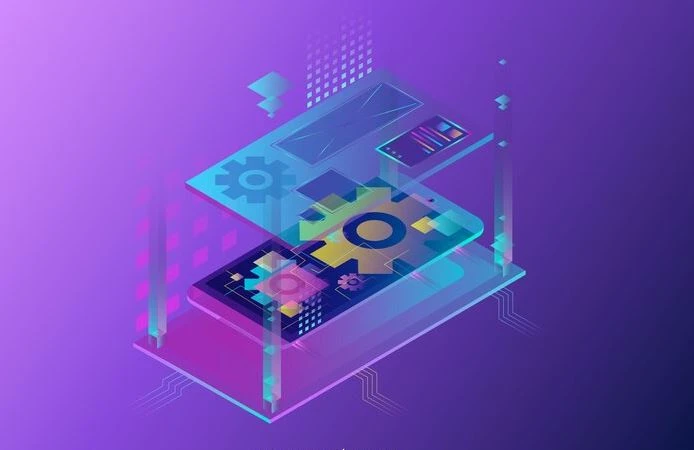
Embedded software development is the process of designing, writing, and testing code that runs on dedicated hardware to perform a specific task, like controlling a motor, reading a sensor, or managing a display. Unlike apps on your phone, embedded software is locked to one device, runs with tight memory and power limits, and usually doesn’t have a user interface in the traditional sense.
In simple terms, embedded software is the brain inside a non-computer machine. A pacemaker, a smart thermostat, an ATM, an aircraft control unit, all of them rely on embedded code that has been written specifically for the chip inside. The code is often stored in flash or ROM memory and starts running the moment the device powers on.
There’s a small but important distinction worth knowing. Embedded software is the code itself. An embedded system is the full package of hardware plus software working together as a single product. So your car’s airbag controller is an embedded system, and the firmware that decides when to deploy is the embedded software running on it.
A few real-world examples of embedded software in action: Automotive ECUs managing engine timing and ADAS features, medical devices like insulin pumps and patient monitors, industrial PLCs running factory robots, smart home gadgets like Nest thermostats, and wearables tracking heart rate and steps. The common thread is that the software is dedicated, deterministic, and built to run reliably for years.
Why Is Embedded Software Development in High Demand?
Embedded software is in high demand because nearly every modern product, from EVs to smartwatches to industrial robots, now needs custom firmware to function. With IoT devices expected to roughly double from 21.5 billion in 2025 to 41.1 billion by 2030, manufacturers are racing to ship connected products, and each one needs an embedded software layer.
The numbers tell the story. The broader embedded systems market is on track to grow from $178.15 billion in 2024 to $283.9 billion by 2034 according to Precedence Research. Real-time operating systems alone account for over 40% of embedded software revenue, because they’re essential for the timing-sensitive work that aerospace, automotive, and industrial control systems require.
There are four main forces driving the demand:
- IoT and connected devices. Every connected sensor or smart appliance needs firmware to handle communication, edge processing, and data security.
- Automotive electrification. Modern EVs run on dozens of ECUs, and ADAS features like lane keeping or automatic braking are pure embedded software problems.
- AI at the edge. Inference is moving from the cloud onto the device, which means embedded engineers now need to ship optimized models alongside firmware.
- Healthcare and wearables. Patient monitoring, glucose tracking, and remote diagnostics all depend on certified embedded systems that meet strict reliability standards.
If you’re a UAE-based business looking at this trend, the timing is good. Demand for dedicated software developers in the UAE with embedded skills is climbing as more regional manufacturers add smart capabilities to their products.
The 6 Stages of the Embedded Software Development Process

The embedded software development process has six core stages: requirements analysis, hardware selection, architecture design, firmware coding, integration testing, and deployment with maintenance. Most teams use a V-model or hybrid agile approach, since pure agile rarely works when you’re tied to physical hardware that takes weeks to manufacture.
Embedded development is more disciplined than typical app development for one big reason: you can’t just push a hotfix once devices are in the field. A structured lifecycle is essential because firmware often runs on shipped hardware for years or even decades. Here’s how the six stages break down.
Stage 1: Requirements Analysis and Planning
Every embedded project starts by defining what the device actually has to do. That means working with stakeholders to capture functional requirements (what the device must do), non-functional requirements (how fast, how reliable, how power-efficient), and any compliance constraints. For medical or automotive products, this stage also identifies which standards apply, like ISO 26262 for cars or IEC 62304 for medical devices.
Stage 2: Hardware Platform Selection
Picking the right chip is one of the most consequential decisions you’ll make. The choice between a simple MCU like an STM32 or ESP32 and a multi-core SoC running embedded Linux changes everything: the operating system, the tools, the testing approach, and the cost. Teams have to balance processing power, memory, peripherals, power draw, certification needs, and the long-term availability of the part.
Stage 3: Architecture and System Design
Modern teams now do hardware-software co-design, developing PCB design, firmware, and system architecture in parallel rather than sequentially. This approach catches architectural mismatches early and shortens the overall product timeline. Decisions made here, things like memory layout, task scheduling, and communication protocols, are extremely expensive to change later.
Stage 4: Firmware Coding
This is where engineers actually write the embedded code. Most production firmware is written in C or C++, with safety-critical layers using languages like Ada or, increasingly, Rust. Developers write low-level drivers to talk to hardware peripherals, build the application logic, and integrate any RTOS services they’re using. Code reviews and static analysis are non-negotiable here, since silent bugs in low-level code can be brutal to track down.
Stage 5: Testing, Integration, and Validation
Testing in embedded development is layered. Unit tests run on the development host, hardware-in-the-loop (HIL) tests run with the real chip, and system tests put the full device through real-world conditions. For safety-critical systems, the V-model formalizes this by pairing every design phase with a matching test phase, requirements get system tests, architecture gets integration tests, and modules get unit tests.
Stage 6: Deployment and Long-Term Maintenance
Shipping is just the start. Embedded products need over-the-air (OTA) update mechanisms, field telemetry, and security patching for years after launch. Teams that skip OTA from the beginning often regret it the first time a critical bug ships, since recalling devices is far more expensive than pushing a remote firmware update.
What Are the Most Popular Embedded Programming Languages in 2026?

C remains the dominant language in embedded software development in 2026, with C++ a strong second for larger systems and Rust climbing fast in safety-critical work. Most production firmware shipping today is still written in C or C++, but Rust adoption is accelerating in medical, aerospace, and automotive teams that need memory safety guarantees without sacrificing performance.
There’s a reason C has held the top spot for decades. Embedded products often have lifetimes approaching or exceeding a decade, which means companies have huge investments in existing C and C++ codebases that won’t get replaced overnight. Established teams stick with what works, while new projects are where alternative languages get a real shot.
Here’s how the main languages stack up in 2026:
| Language | Best For | Why It’s Used |
| C | MCUs, RTOS kernels, drivers | Closest to hardware, smallest binaries, mature compilers |
| C++ | Larger systems, complex apps | Object-oriented features without giving up performance |
| Rust | Safety-critical firmware | Memory safety at compile time, no garbage collector |
| Python | Edge AI, scripting on Linux | Fast development, huge ecosystem for ML and data |
| Ada/SPARK | Aerospace, defense, medical | Formal verification for life-critical code |
| MicroPython | Rapid prototyping on MCUs | Lets non-C developers write firmware fast |
| Go | IoT gateways, network stacks | Built-in concurrency for edge networking |
If you’re picking a language for a new project in 2026, the practical advice is this: stick with C or C++ for tight MCU work, evaluate Rust for new safety-critical modules, and lean on Python or MicroPython for prototypes and edge AI. If your team is choosing between options for a related project, our breakdown of Python vs Java covers the broader trade-offs that also affect embedded teams building edge inference.
Key Components of an Embedded System
Every embedded system has three layers working together: the hardware (the chip and its peripherals), the embedded software (the firmware and application code), and the operating system (often an RTOS, sometimes embedded Linux, sometimes nothing at all in bare-metal designs). Understanding how these layers interact is key to making good architecture decisions.
Hardware Layer
At the center sits a microcontroller (MCU) or system-on-chip (SoC). Around it you’ll find RAM for runtime data, flash or ROM for the program, GPIO pins to talk to the outside world, and specialized peripherals like ADCs, timers, and communication blocks for protocols like SPI, I2C, UART, and CAN. Power management circuitry, often a critical part of the design for battery-powered products, completes the hardware picture.
Software Layer
The software layer is where the firmware lives. At the lowest level, hardware abstraction layers (HALs) and device drivers handle the raw peripheral access. Above that sits the application logic, which is what makes the device do its actual job. For systems with rich UIs or complex networking, you’ll also find middleware libraries handling things like Bluetooth stacks, file systems, or TLS encryption.
Operating System Layer
Not every embedded system has an OS. Simple devices run bare-metal, meaning the firmware loops forever, handling interrupts as they come. More complex systems use a real-time operating system (RTOS) like FreeRTOS, Zephyr, or VxWorks, which schedules tasks based on priority and timing constraints. The biggest devices, gateways, infotainment units, advanced cameras, often run embedded Linux for full networking and multimedia support.
Essential Tools Used in Embedded Software Development
Embedded software development tools fall into five categories: integrated development environments (IDEs), compilers and toolchains, debuggers, simulators or emulators, and version control with CI/CD systems. The right combination depends on your chip vendor, your operating system choice, and any compliance requirements your product has to meet.
Here are the tool categories every embedded team relies on:
- IDEs and editors. Vendor IDEs like STM32CubeIDE, MPLAB X for Microchip, or TI Code Composer Studio handle chip-specific setup. Many teams also use VS Code with PlatformIO or Eclipse for vendor-agnostic work.
- Compilers and toolchains. GCC variants like arm-none-eabi-gcc dominate, but commercial compilers from IAR or Keil are still common in automotive and medical work, where certified toolchains are required.
- Debuggers and probes. Hardware debuggers like SEGGER J-Link or ST-Link let engineers step through firmware running on real hardware. Without one, debugging an MCU is mostly guesswork with print statements.
- Simulators and emulators. Tools like Renode, QEMU, and Proteus let teams test firmware before hardware exists. This is critical when PCB lead times stretch into weeks.
- Version control and CI/CD. Git is standard, but embedded teams add hardware-in-the-loop runners, automated flashing rigs, and static analysis tools like MISRA C checkers, Coverity, or Polyspace.
If your team is also evaluating broader tooling decisions, the same trade-offs that come up in software development models apply here too, just with extra weight on testing and traceability because of the hardware dependency.
How Much Does Embedded Software Development Cost?
Embedded software development costs typically range from $10,000 for a basic MVP to over $250,000 for a high-compliance system. A simple connected sensor with bare-metal firmware might cost $10,000 to $30,000, a mid-tier industrial IoT product runs $40,000 to $120,000, and certified medical or automotive firmware easily passes $150,000 once compliance work is factored in.
These ranges are based on industry benchmarks. Basic MVPs typically land in the $10K to $30K bracket, mid-tier builds with RTOS and middleware sit at $40K to $120K, and high-compliance systems with ISO 26262 or IEC 62304 certification land in the $150K to $250K+ range. Hourly rates also vary sharply by region in 2026, with US embedded engineers running $75 to $135 per hour and Indian teams at $15 to $50 per hour for similar skill levels.
The biggest cost drivers in embedded projects are:
- Hardware complexity. More peripherals mean more drivers, more debugging, and more integration time.
- Real-time and safety constraints. Hard real-time systems and certified safety code can multiply effort 2x to 5x.
- Connectivity stacks. Adding BLE, Wi-Fi, LTE, Matter, or Thread support each carries certification and integration overhead.
- Compliance and certification. ISO 26262 for automotive, IEC 62304 for medical, FCC for radio, all add documentation and test cycles.
- OTA and field maintenance. Often skipped in early estimates, but essential for any product that ships at scale.
It’s also worth budgeting for ongoing costs. Annual maintenance for embedded IoT software typically runs 15% to 25% of the initial development cost, covering bug fixes, security patches, and platform updates. For a $200,000 build, that’s $30,000 to $50,000 a year for the life of the product.
Common Mistakes to Avoid in Embedded Software Projects
The most expensive embedded software mistakes are scoping ones, not coding ones. Skipping early hardware-software co-design, underestimating compliance work, leaving OTA updates out of the original architecture, and choosing exotic chips without checking long-term availability are the four issues that wreck more projects than any bug ever has.
Here’s what to watch out for, in priority order:
- Treating hardware and software as separate phases. Sequential development is dead in 2026. If your firmware team and your hardware team aren’t talking from day one, you’ll discover incompatibilities at the worst possible moment.
- Underestimating testing time. Embedded testing isn’t just unit tests. It’s HIL setups, environmental chambers, EMC labs, and certification rounds. Many teams budget 20% of project time for testing when 40% is closer to reality.
- Skipping OTA from the architecture. Adding remote firmware updates after the fact is painful. Designing for OTA from the start adds modest cost and saves enormous risk.
- Picking exotic or single-source chips. If your microcontroller becomes unavailable mid-product life, you’re either porting firmware or dropping the product. Always have a second-source plan.
- Ignoring security at the start. Embedded devices are now attack targets. Secure boot, encrypted communication, and signed firmware updates need to be in the design, not bolted on later.
These are the same kinds of trade-offs that come up in any custom software development project, but the consequences hit harder in embedded because devices live in the field for years and can’t always be recalled cheaply.
How to Choose an Embedded Software Development Partner
Choose an embedded software development partner based on three things: proven hardware experience in your specific domain, certifications that match your compliance needs, and a clear track record of shipping products to production. Vendors who only build apps or web platforms will struggle with the hardware-tied realities of embedded work.
When you’re evaluating partners, ask for these specifics:
- Domain experience. Have they shipped products in your space, automotive, medical, industrial, consumer? Generic firmware experience isn’t always transferable.
- Hardware expertise. Do they have engineers who can read schematics, oscilloscope traces, and datasheets, or are they pure software shops?
- Compliance know-how. If you need ISO 26262, IEC 62304, FDA submissions, or DO-178C, the team needs to have done it before.
- Lifecycle support. Can they support the product five or ten years from now? Many cheap vendors disappear after launch.
- Communication and process. Embedded projects require tight coordination. Time zone alignment, sprint discipline, and clear documentation matter more than rate cards.
If you’re hiring locally, the same general principles in our guide on how to choose a mobile app development company apply, with the added requirement that your partner can show real hardware deliverables, not just screenshots.
Final Thoughts
Embedded software development is one of the most demanding and most rewarding corners of software engineering. The market is growing fast, the technology is moving fast, and the products you build can run reliably for a decade. But the discipline matters. Treat hardware and firmware as one system, plan for compliance and OTA from day one, and pick partners who have shipped products like yours before.
Three takeaways to carry forward: First, the embedded software market is on track to nearly double by 2030, and the demand for skilled teams is climbing alongside it. Second, the right language and toolchain still matter, with C and C++ leading and Rust gaining real ground in safety-critical work. Third, the cost of embedded software scales with hardware complexity and compliance needs, so scoping accurately upfront is the single biggest determinant of project success.
If you’re planning an embedded project in the UAE or beyond and want to talk through hardware choices, architecture, or vendor options, get in touch with Struqtio’s engineering team for a scoped conversation. We’ve worked across IoT, fintech, and industrial systems, and we’d be happy to help you figure out the right path for your product.
Frequently Asked Questions
| What is embedded software development in simple terms? Embedded software development is the process of writing code that runs on dedicated hardware, like a microcontroller or sensor, to perform a specific task. It’s the firmware behind devices like smartwatches, car ECUs, smart thermostats, and industrial machines. Unlike apps on a phone, embedded software is locked to one device and runs with strict memory, power, and timing limits. |
| How long does it take to develop embedded software? An MVP for a simple connected device usually takes 2 to 4 months. Mid-tier industrial IoT products take 6 to 9 months. Certified medical or automotive firmware can run 12 to 24 months when you factor in compliance, lab testing, and regulatory submissions. The hardware lead time is often the bottleneck rather than the code itself. |
| What programming language is best for embedded software development? C is still the most widely used embedded programming language in 2026, with C++ a close second for more complex systems. Rust is gaining real ground in safety-critical work because of its memory safety guarantees, and Python or MicroPython are popular for prototypes and edge AI. The right choice depends on your hardware, performance needs, and certification requirements. |
| What is the difference between embedded software and embedded systems? Embedded software is the code itself, the firmware and application logic that runs on a chip. An embedded system is the full product, hardware plus software working together as a dedicated device. So a smart thermostat is an embedded system, and the firmware that decides when to turn on heating is the embedded software running on it. |
| How much does it cost to hire embedded software developers? Embedded software developer rates in 2026 range from $15 to $50 per hour in markets like India and Eastern Europe, $40 to $90 per hour in the UAE and parts of Asia, and $75 to $135 per hour in the United States and Western Europe. Senior engineers with safety-critical or compliance experience command higher rates across all regions. |

Empower your digital journey with StruqtIO - Your dedicated partner for cutting-edge custom software development, innovation, and digital transformative solutions. Harness the power of technology to elevate your business and redefine your digital landscape today.